
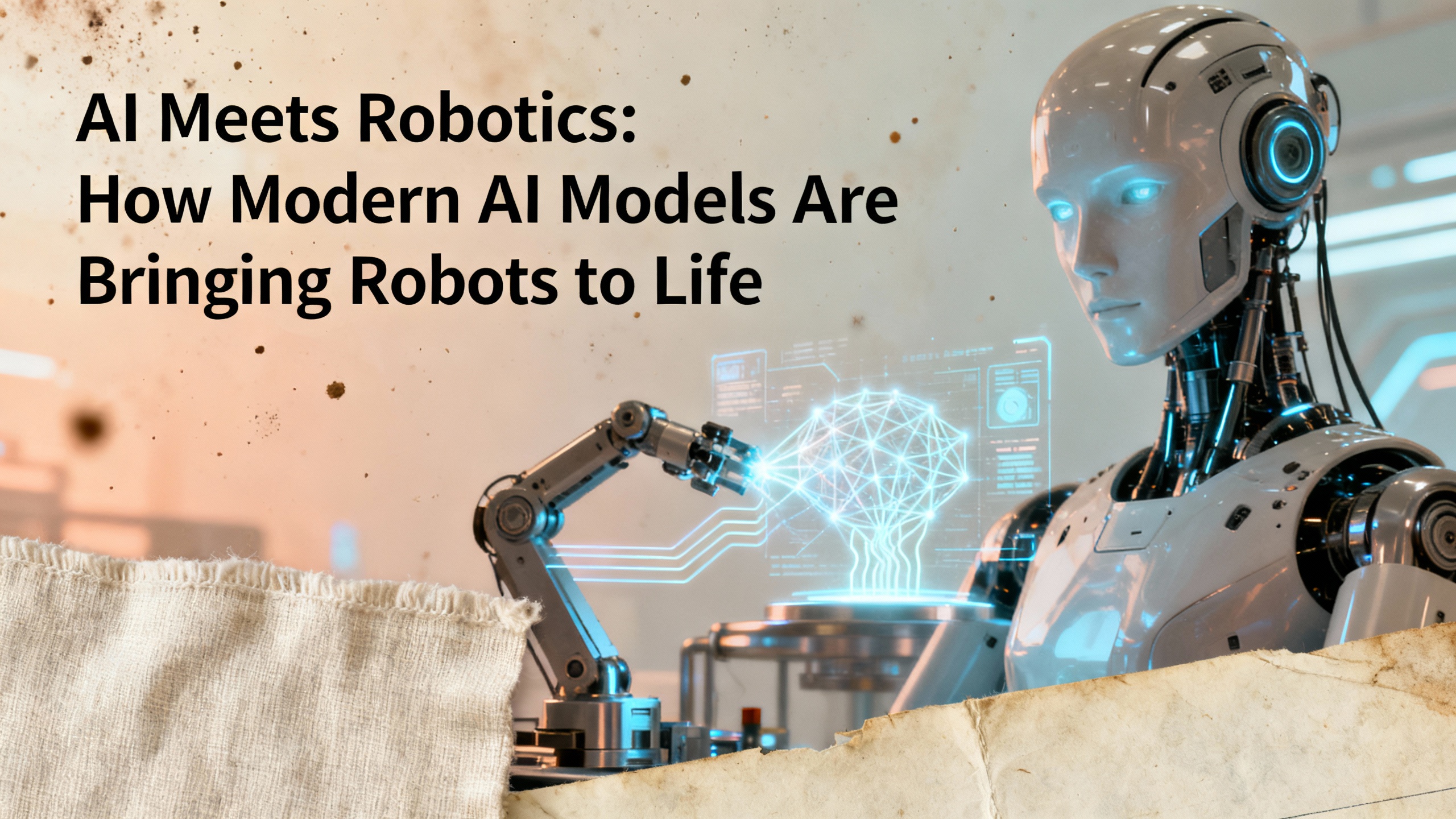
AI Meets Robotics: How Modern AI Models Are Bringing Robots to Life
In 2025 the frontier of artificial intelligence is no longer limited to digital screens AI models are now being deployed inside physical robots enabling machines to see think and act in the real world. Companies like Google DeepMind NVIDIA and various robotics manufacturers are leading this transformation blending AI and robotics to power a new generation of intelligent embodied machines.
In this post we’ll explore how AI powered robots are becoming a reality the technology behind them their current capabilities and what this means for the future of work daily life and robotics.
What’s New: AI Models in Robots
AI Brains for Robots
Recent breakthroughs have produced models specifically designed to control robots. For example DeepMind’s Gemini Robotics a vision language action (VLA) model lets robots interpret visual input understand language instructions and perform physical tasks like picking up objects folding items or manipulating tools.
Gemini Robotics ER (Embodied Reasoning) and the latest versions (e.g. “1.5”) allow robots to generalize behaviours across different robot forms meaning a model trained on one robot can be transferred to another without retraining accelerating robotics development across hardware platforms.
More Than Digital Real World Interaction
Unlike traditional automation which handles simple repetitive tasks AI powered robots can handle complex dynamic tasks in unstructured environments. For example: robots that can react to changing surroundings adapt to new objects follow spoken instructions or manipulate items with precision.
This shift transforms robots from fixed-function tools into adaptive agents capable of general purpose tasks which opens up possibilities beyond factories from home assistance to logistics healthcare support and more.
Why This Matters For Industry Consumers and Society
✅ Industry & Manufacturing
With AI driven robots industries can scale automation without building custom hardware for each task. Robots can learn new tasks quickly adapt to different environments and reduce reliance on manual labour for repetitive or dangerous jobs. This can increase productivity reduce costs and improve workplace safety.
✅ Everyday Life & Services
In the near future AI robots may assist with household chores elderly care cleaning delivery services or even office work. Their flexibility and understanding of real world contexts make them far more useful and safe than traditional robots.
✅ Innovation & Tech Growth
The combination of advanced AI models with robotics accelerates innovation. Startups and research labs can build robots without needing to engineer bespoke control systems they can focus on high-level behaviour and let AI handle the complexity of perception and action.
✅ Toward General Purpose AI Agents
These advances are seen by many as a stepping stone toward general-purpose AI agents capable of reasoning planning and acting in the physical world not just on screens. For some this represents the beginning of a long term transformation akin to the industrial revolution.
Challenges & What Still Needs Work
Despite the promise major hurdles remain:
Safety & Ethics: Robots acting in the physical world can cause harm if they malfunction or misinterpret instructions. Ensuring safe reliable behaviour is critical.
Generalization & Robustness: While models like Gemini Robotics can transfer between robots not every task or environment is reliably handled real world variability remains a challenge.
Cost & Accessibility: Advanced robotics hardware is expensive widespread adoption will take time.
Regulation & Responsibility: As robots become more autonomous questions arise about liability privacy and ethical use especially in public or domestic settings.
Because of these issues many AI robotics deployments will likely start in controlled or industrial settings before expanding to homes or public spaces.
What’s Next What to Watch For
New generations of VLA and embodied AI models (on-device or cloud-assisted) that can handle longer tasks human interactions and multi step reasoning.
Broader adoption in industries like logistics healthcare elder care and agriculture where robots can take on complex physical tasks.
Regulatory and ethical frameworks emerging globally to ensure safe fair and accountable use of AI robots.
Improved human robot collaboration: robots working alongside humans augmenting capabilities rather than replacing them.
Research into general-purpose embodied AI agents possibly leading to robots with human level versatility over time.
Final Thoughts
The integration of advanced AI models into physical robots marks a turning point from screen bound AI to physical agents capable of interacting with the real world.
While many challenges remain the progress made by DeepMind and others shows the tremendous potential of embodied AI. As robots grow smarter more flexible and safer they could become an integral part of many industries and perhaps even our daily lives.
If managed responsibly AI powered robotics could redefine work improve quality of life and open up a future where humans and robots collaborate seamlessly.