AI in Media Entertainment & Creativity. How Artificial Intelligence Is Transforming the Future of Content
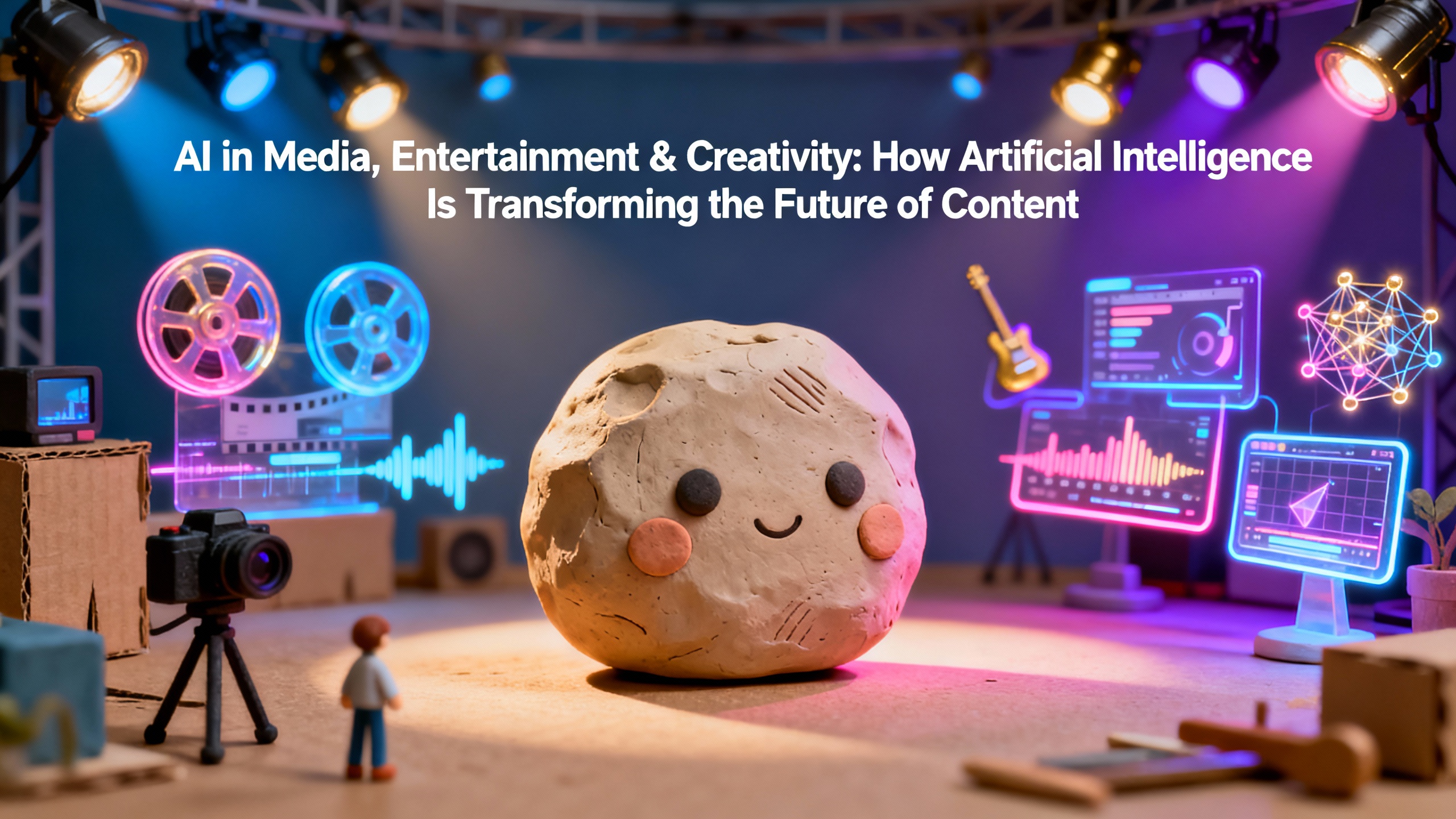
Artificial Intelligence is no longer limited to business automation or data analytics. Today AI is deeply reshaping the media entertainment and creative industries from film production and digital actors to music generation script writing and personalised content experiences. The rise of AI driven creativity is unlocking new opportunities but it is also raising serious questions about authenticity ethics and the future of human creativity.
Here is a complete breakdown of how AI is transforming the modern entertainment world.
1. AI Generated Actors Are Entering the Film Industry
One of the biggest developments in recent entertainment news is the rise of AI created actors. These digital performers can be generated using advanced neural networks capable of mimicking:
Facial expressions
Voice tone
Human like behaviour
On screen presence
This innovation allows studios to create characters quickly and cost effectively. While it opens creative possibilities actors and filmmakers worry about:
Loss of jobs
Unfair competition
Lack of regulation
Blurring the line between real and digital talent
AI actors may help reduce production costs but they also spark major ethical debates.
2. AI Tools Are Revolutionising Film Production & Editing
From Hollywood to independent creators AI is becoming an essential tool in film making. Modern applications include:
Automated video editing
Enhancing visual effects
Script generation
Budget optimisation
AI powered dubbing and translation
These tools save hours of manual work and allow creators to focus on storytelling rather than repetitive tasks. As AI becomes more advanced it is expected to become a standard part of the production pipeline.
3. AI Powered Music Creation Is Changing the Sound of Entertainment
Music industries worldwide are embracing AI for:
Beat creation
Vocal synthesis
Mixing and mastering
Personalised playlists
AI generated music can now replicate styles of popular artists create soundtracks instantly and help independent musicians produce high quality audio without the need for expensive studios.
However this also raises important questions:
Who owns AI generated music?
Can it replace human musicians?
How will copyright laws adapt?
These issues continue to shape the future of AI in the music world.
4. AI Is Transforming Writing Animation & Digital Art
Creative fields such as illustration script writing story boarding and animation are experiencing an AI driven revolution.
AI is being used for:
Story idea generation
Character design
2D/3D animation rendering
Digital artwork and concept art
Interactive storytelling
AI tools help creators produce more content in less time. But traditional artists argue that these tools may overshadow human skill and originality if not regulated properly.
5. Personalised Entertainment Is Becoming the New Standard
Streaming platforms gaming studios and social media networks are using AI to deliver hyper personalised content.
Examples include:
Tailored movie suggestions
Personalised playlists
AI guided gaming experiences
Targeted ads and recommendations
This enhances user satisfaction and increases engagement but it also brings privacy concerns as platforms rely heavily on user data.
6. Ethical Legal & Creative Concerns Are Growing
As AI becomes more involved in entertainment several challenges are emerging:
Copyright disputes
Deepfake misuse
Authenticity of AI generated actors
Fair compensation for artists
Transparency in AI assisted creation
The industry is now pushing for regulations that ensure responsible usage while still supporting innovation.
Conclusion: AI Is Redefining the Creative Landscape
AI has unlocked exciting new possibilities across film music gaming writing and digital art. It empowers creators simplifies production and opens new storytelling horizons. However its rapid growth also brings serious concerns that require clear laws ethical standards and transparency.
The future of entertainment will likely be a collaboration between human creativity and AI innovation not a replacement of one by the other.